13 September
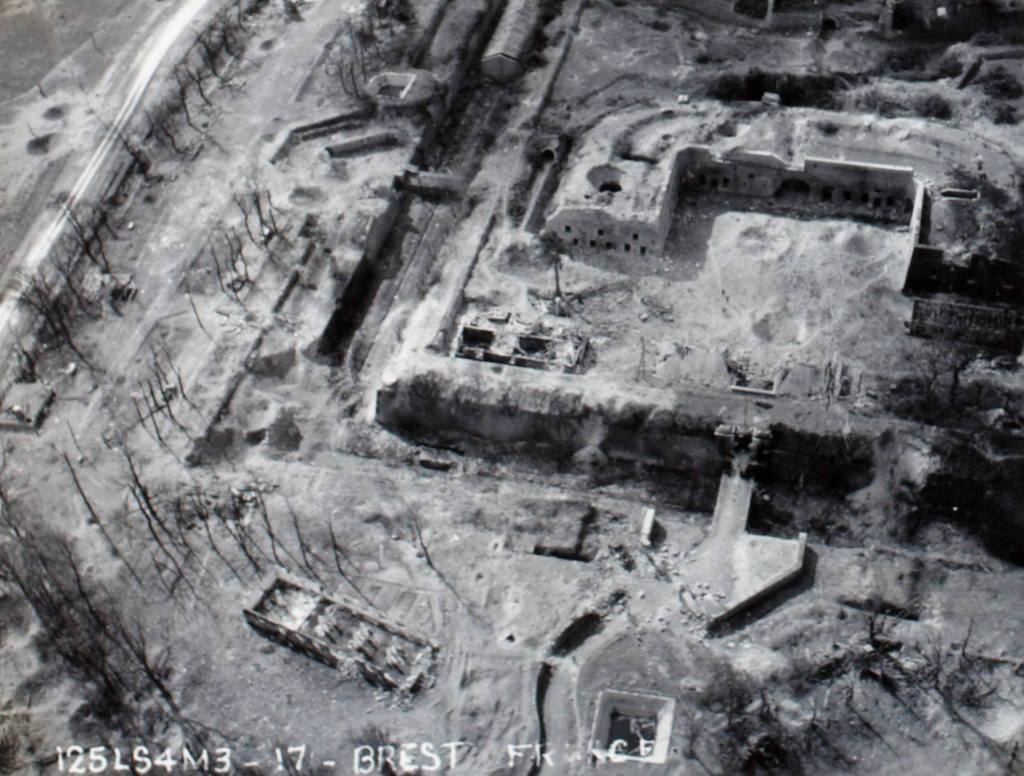
On the night 13-14 Sep the US Army 1st Battalion 116th Regiment took over forward positions due east of Fort Montbarey, and B Squadron 141st Royal Armoured Corps moved up to join them at 4kmh covered by artillery fire to mask their approach.

14 September.
In order to breach the minefield, anti-tank ditch and sunken road, the original plan was for the US Infantry to move forward supported by four 141 RAC Headquarters’ tanks (standard Churchills) and 1 Platoon of US M10 Tank Destroyers firing high explosive shells.
US Engineers followed by the Infantry were to sweep a path in the minefield and then place prepared explosive charges in the anti-tank ditch and first sunken road.
However, the US Infantry and Engineers suffered considerable casualties whilst moving forward and clearing the minefield under fire. By midday the US Infantry were within 180m of the outer defences of the Fort but could not advance further.
Capt. Cobden and the Reserve Company Commander decided on a revised plan to put in a Company attack supported by a troop of Crocodiles commanded by Lieut Ward.
The new plan was for the Crocodile tanks to move through the minefield covered by artillery smoke, closely followed by two US Infantry platoons. The 3rd Platoon and Company Commander were then to move through the minefield with two Churchill Headquarters’ tanks to support the assaulting waves. The US Company Commander would then go through the assault wave and break into the fort.
Capt. Cobden went forward with the Engineers to decide whether the tanks could traverse the anti-tank ditch and the sunken road. Despite a number of Engineers being killed and wounded Capt. Cobden and a US Sapper Sgt. Humphreys were able to return with the information required.
The renewed attack led by Lieut. Ward started at 1400hrs and the tanks advanced through the minefield. The second tank commanded by Sgt Leslie Morley hit a 140kg naval shell buried as a mine, and was destroyed, the driver L/Cpl Dennis Moore being killed, and the remainder of the crew badly wounded.
The disabled tank now blocked the way for the remaining tanks. Under heavy covering fire by the HQ Churchills and 3 M10 Tank Destroyers firing High Explosive, the US engineers were able to clear a new passage around the tank.
Lieut. Ward in the leading Crocodile had however got through the minefield and obstacles and engaged the snipers, machine guns and anti-tank weapons being fired from the Fort. Using the tank’s flamethrower, he enabled the US Infantry to break through the two outer defences and get around behind the Fort and attack the German defences from the rear.
Having used up used all his flame fuel and main ammunition, Lieut. Ward set out to return, but his tank fell into a further, undetected tank trap and onto a German Bunker. The tank was immediately surrounded by Germans waving white flags. But they quickly discarded the white flags realising the tank was trapped on its side.
With fumes from leaking petrol and a punctured methyl bromide fire extinguisher filling the tank, the crew had no option but to open the hatches. Brandishing his pistol Lt Ward demanded the Germans surrender. Reinforcing his message by grabbing the Churchill’s Bren machine gun he succeeded. But he and the crew were now isolated in the middle of the minefield.
Meanwhile Capt. Cobden and two other Churchill tanks had managed to bypass Sgt Morley’s disabled tank. The US commander Major Dallas sent forward a scratch platoon of US drivers and engineers to act as Infantry and with the three tanks moved into the fort perimeter to assist Lieut. Ward.
Almost immediately the three tanks became stuck themselves and one lost a track. Capt. Cobden sent the drivers and engineers forward to support Lt Ward, but they became pinned down 200 meters away. Lieut. Ward his crew and the prisoners had to dash back across the minefield to reach them, all the while under fire from the Fort.
Eventually the three tanks were extricated and together with Lt Ward’s crew plus 30 German Prisoners of war, the tanks moved back to the Allied lines.
During the move back, 2nd Lieut. Hare’s tank at the rear of the column hit a further 140kg naval shell. The immense explosion blew the turret off, killing the driver Trooper Eric Guy. The co-driver Trooper Albert Frudd died the next day. The remainder of the crew were badly wounded but survived.
122 German soldiers had been captured including 6 Officers, but the main Fort still held out.
15 September
The US Infantry were now within 10m of the final defences of the Fort, but before a final assault B Squadron, 141 RAC’s commander, Major Ryle insisted the minefield gap be completely cleared and the outer defences of the Fort bulldozed. This took the remainder of the day.
Meanwhile the Churchills plus the US Tank Destroyers kept up a relentless barrage on the defences.
16 September
US Major Dallas and Major Ryle were now in a command post 45m from the Fort.
As the attack commenced the Fort was subject to intense direct fire by the Churchills, plus the US M10 Tank Destroyers at close range. A Crocodile commanded by Sgt Decent went forward and flamed the inner defences works, situated in the Fort, beyond the moat.

A captured German prisoner was sent into the Fort, to call for the surrender of the Fort. The German commander replied his orders were to remain there and fight to the last, and if this was the best the Allies could do, he needed a better sample of fire and destruction before he would even consider capitulation.
Therefore two more 141 RAC Troops, Nos 6 and 10, of six tanks under command of Lieut Shone and 2/Lieut Conway respectively, went forward and directed all their flame and all their high explosive ammunition at the fort. At the same time all available firepower, infantry mortars, phosphorous shells, and heavy weapons brought down the maximum weight of explosive power, including two 105mm close support howitzers firing over open sights. The weight of the fire power was gradually shifted from the Western to the Northern edges and a task force consisting of infantry and engineers went into the moat and placed prepared charges against the walls of the Fort.
When the charges were blown and under cover of smoke and a barrage of flame and fire power, the US Infantry assaulted through the hole blown in the outer wall. Inside the Fort they were met by a German Officer Cadet bearing a white flag. He together with 30 men were prepared to surrender as they had no more ammunition and were being asphyxiated by the smoke from the flame and the phosphorous. By this time the outhouses of the Fort itself were ablaze. The US Infantry continued through the Fort and after hand to hand fighting the Fort surrendered.
A total of 83 German surrendered, including 3 officers and 1 Officer Cadet. The garrison had been able to hold out due to the immense strength of the fortification’s walls and the use of gas masks to resist the fumes of the chemical/petrol mix of the Crocodile flamethrowers plus the phosphorous. But even the 18th century walls could not resist the final combined Allied onslaught at almost point-blank range. Mostly out of ammunition and with no prospect of resupply the Garrison defenders finally capitulated.
 brittanyremembers.com