It is perhaps hard to believe that a Royal Navy battleship built during the First World War, which had taken part in the famous Battle of Jutland in 1916, was to play an important role the battle for Brest 28 years later.

HMS Warspite was no ordinary ship. By the end of the Second World War, she had been received more battle honours than any other ship in the Royal Navy. By 1944 The “Grand Old Lady” as she became known had already taken part in the 1940 Norway campaign 1940), the battle for Crete (1941), the Allied landings in Italy (1943) as well as action in the Pacific and Indian Ocean.
Her eight 15-inch guns (381mm) plus fourteen 6-inch guns (152mm) packed a formidable punch, which no land-based artillery could match. She was the first naval ship to open the Allied bombardment on D-Day. Although damaged, she was given urgent repairs at Rosyth dockyards and her 15-inch guns replaced. Despite her speed being reduced by 40% due to damaged propellor shafts she was dispatched to assist the US Army assault on Brest. With her were 5 destroyers HMS Assinibor , Duncan Fame, Hospur, and Inconstant,
The German defences concentrated around the eight 18th century Forts, supplemented by fortified gun emplacements represented a formidable obstacle to the US Forces. It is estimated that by the end of the siege around 394,000 artillery rounds had been fired at the fortifications.
As Brest main defences were designed to repel an attack from the sea, HMS Warspite took advantage of the St Mathieu peninsula to establish herself on 25 August 15 miles to the north of Brest.
Using Spitfires as spotter planes HMS Warspite began a systematic bombardment of the Brest fortifications. Each target was engaged for 30 minutes. A total 213 rounds of 15-inch shells were fired including 26 shells on Fort Montbarey. Only at the end of the bombardment was the German battery “Graf Spee” at Le Conquet (now a museum) able to respond. The last salvos coming close to the ship, at which point HMS Warspite retired north to support the attack on le Havre and then to secure the Port of Antwerp in November.
Although the results of her bombardment of Brest not decisive and described as “Disappointing”, it was arguably too early in the assault, as the US Forces had only begun to penetrate the outer German defences, some miles from the fortified walls of the city.
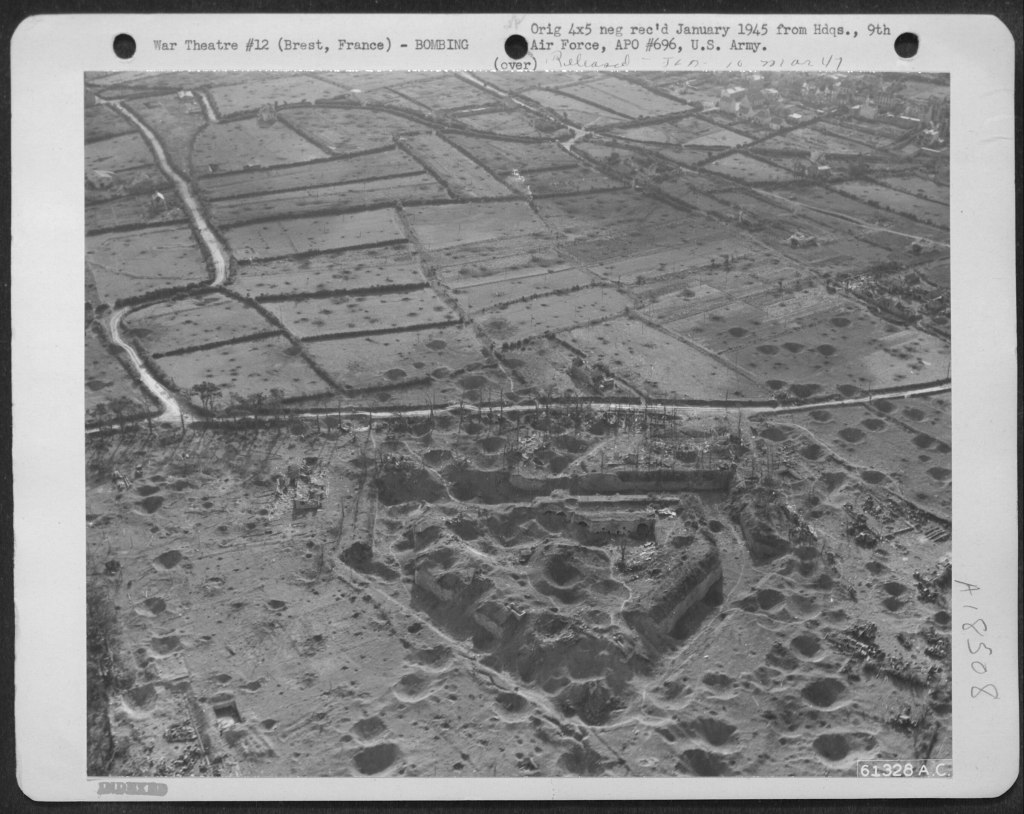
Fort Keranroux was so badly damaged that it was captured by the US 175 Infantry Regiment with mortar support on 15th September. Kerranroux was never rebuilt and is now a park.
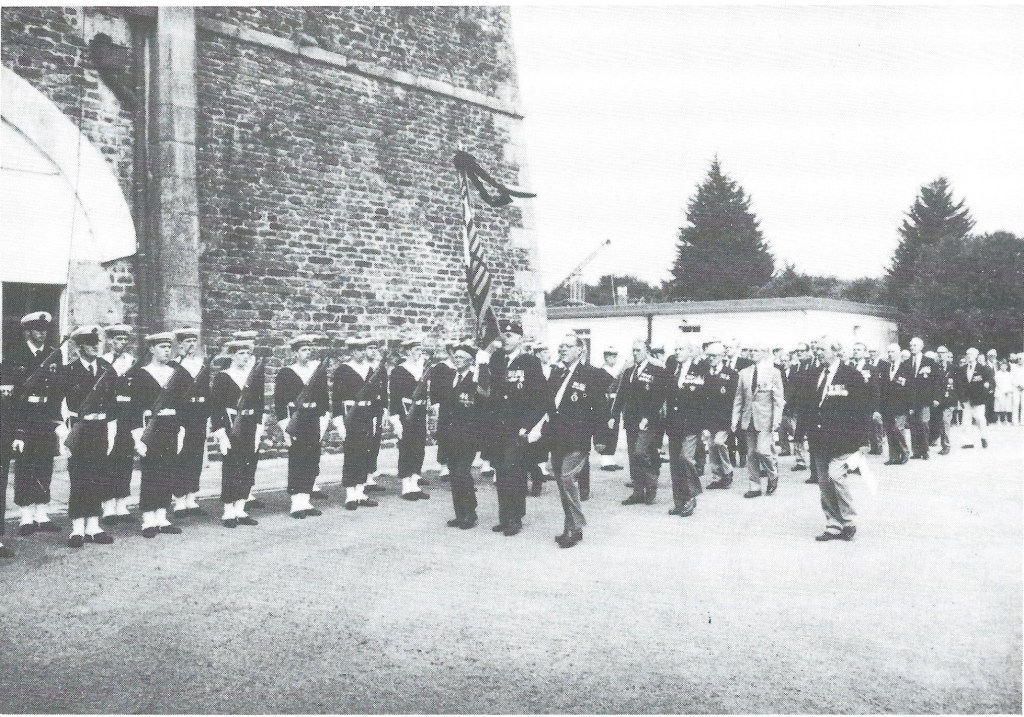
HMS Warspite was decommissioned in 1946, but the following year ran aground in Prussia Cove, Cornwall during a storm on her way to being scrapped. A street in Brest was named in her honour and veterans from the ships company attended commemoration ceremonies at Fort Montbarey until the late 1980’s
 brittanyremembers.com