The story of 30 Assault Unit’s activities in the area around Brest in August and September 1944 has been shrouded in mystery for many decades. Even today the records are scattered across various declassified Top-Secret documents and personal accounts by the Commando’s themselves and the French Resistance fighters who worked with them.
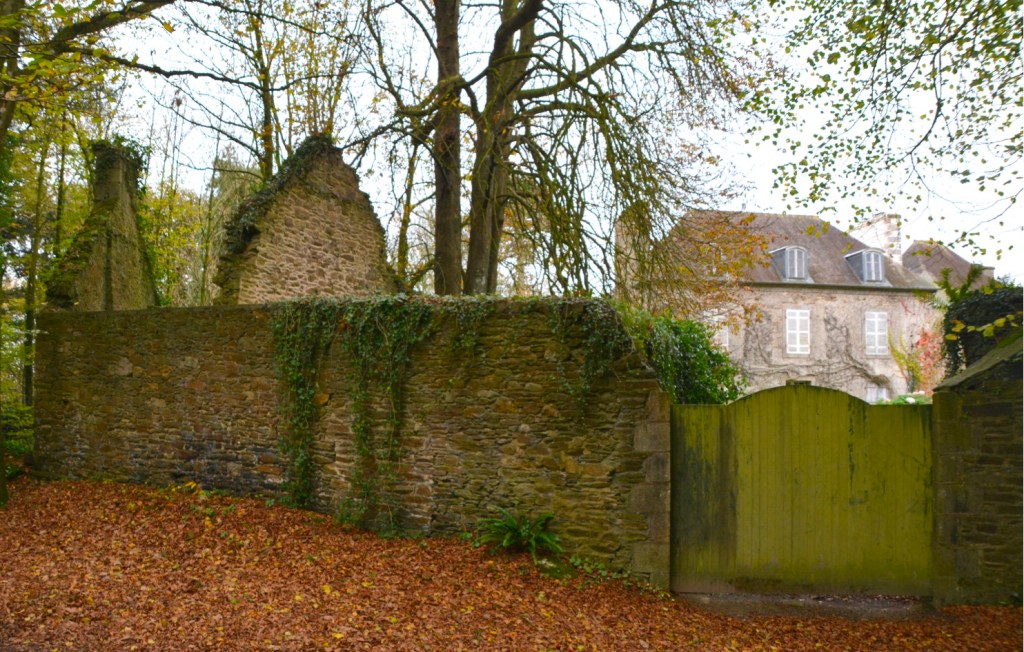
30 ASSAULT UNIT BASE IN LE FOLGOËT
It is a fascinating story of courage, notably the capture of the St Pabu Radar station; of romance, Commando’s falling in love with, and later marrying Breton women in the Resistance; of secrecy, with French born Commandos having to conceal their real identities, to protect their families in occupied France, and frustration, at the weeks of delay in launching the assault on Brest, while the rest of the Allied forces moved northwards through Paris into Belgium.
30 Assault Unit was created and led by Ian Fleming (the author of the James Bond books) modelled on the German AbwehrKommando , to advance with and often ahead of frontline troops to capture German cyphers, charts, secret materiel including innovative new weapons, based on a target list drawn up by British Naval Intelligence.
Their role was not to engage with the enemy but to seize intelligence and in this they were remarkably effective.
As the US 6th Armoured division broke through the German lines at Avranches, small teams of 30 AU spread out quickly across Brittany to Rennes, Vannes and Brest. Lt.Cdr Dalzel-Job described how “Nearly all Brittany became a No Mans Land in which we moved.. avoiding German strongpoints and keeping out of the way of German convoys”

Along the way, notably at Carhaix 30 AU teams encountered French Resistance Fighters led by French SAS (2e Regiment de Chasseurs Parachutistes) who had been tasked with seizing key bridges and strongpoints to allow the allied advance.
Lt Cdr John Hugill described how “It was an emotional business this drive through Brittany for the Bretons are a fine, tough, independent people. I think we were all conscious how unique a thing it was.. and how privileged we were.”
The first elements of 30 AU arrived at Lesneven/Le Folgoët with 24 hours of the first US Forces and established themselves at nearby Lanarvily. Another base was established at Carentec, with a rear headquarters at Pleudihen sur Rance near St Malo. From these the 30 AU teams ran missions around the county, recovering information and materiel to send back to London for analysis.
The most notable of these was the capture of the German radar station at St Pabu. On 11/12 August, alerted by the local Resistance a small group of a dozen Commandos led by Lt Cdr Hugill and Lt Van Cleef succeeded in convincing the German garrison that they were part of a much larger force. 282 Germans surrendered and the radar was captured intact providing key intelligence on the German system and techniques. Lt Hugill was awarded the Distinguished Service Cross for his action. Marine Powell and Sgt McGrath received the Distinguished Service Medal
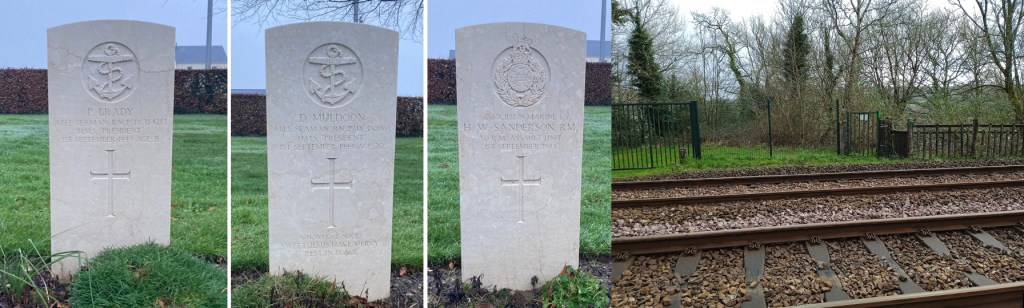
Remarkably only three 30 AU Commandos lost their lives during the weeks leading up to the final assault on Brest. On 1 September during a mission in front of the Allied lines, probably to seize specialised equipment from the munitions factory at “la Pyrotechnie de St Nicolas” (Guipavas) Marine Sanderson, Able Seamen Brady and Muldoon were killed by an IED mine at a level crossing near Landerneau.
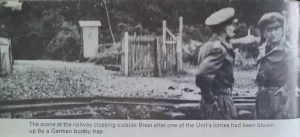
Their bodies were removed to Bayeux CWGC cemetery at the end of the war and no memorial to them exists in Brittany. This year with the help of local historians we have located the site of the incident and together with the Brest Amicale des Fusiliers Marins et Commandos will unveil a new monument to them in September.
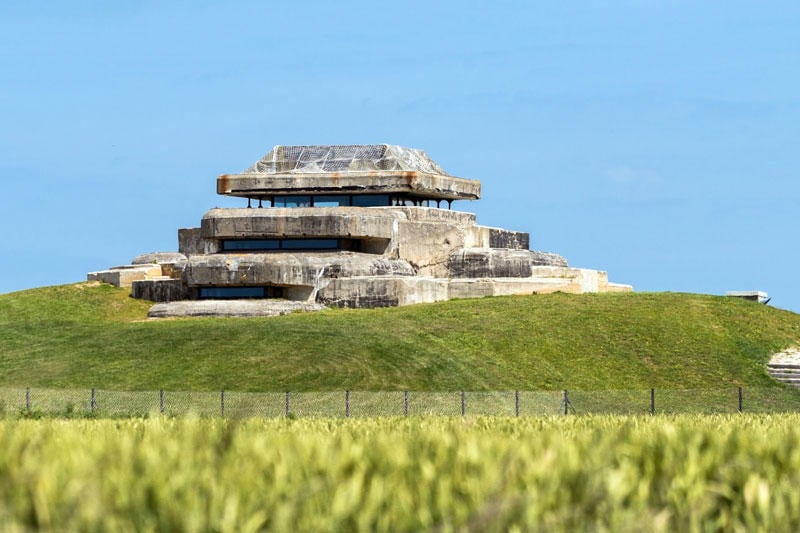
Lt Postlethwaite and a group of 30AU finally entered Brest on, or perhaps slightly before the German surrender on 18 September, but no detailed record of their activity has yet been found. The official War Diary mentions “The elaborate control gear” found at the Graf Spee Battery at Pointe St Mathieu, now an excellent museum.
The operations in and around Brest took place in an extremely dangerous environment. Lt Hugill described the fighting between the Resistance and the German forces as particularly brutal. Several reprisal massacres of civilians took place as the fighting ebbed and flowed notably at Penguerrec and Plouvien (7 and 8 August). It was perhaps to prevent reprisals against their families that 30 AU took the step of drafting three local Resistance fighters formally into their ranks. This is almost unprecedented in the British Army. They were, Honoré Chalm, Hippolyte Foulon and Gilbert Garbe. Honoré Chalm’s diary of the time has survived and has been a key reference.
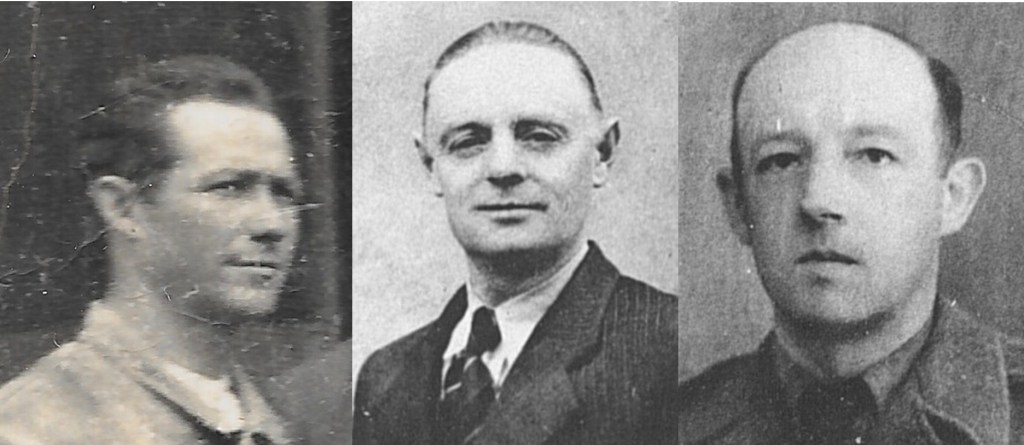
Another remarkable individual was Marc Odin, a Frenchman from Vannes who as a naval cadet escaped to Britain in 1940 and joined the Royal Marines under the pseudonym Andrew Simpson. Contemporary eyewitnesses have him in le Folgoët in early August 1944, but he does not seem to have revealed his true identity.
The toll on the members of 30 AU themselves was not inconsequential. While the spirit of adventure comes out of the few accounts that remain, described by US General Patton as “Pirates”, Hitler had issued orders that any Commandos captured were to be shot. Several 30 AU members went on to have very successful careers after the war, but quite a few clearly suffered the damaging effects of what we would now call PTSD.
30 Assault Unit was disbanded in March 1946. However it was reconstituted in 2010 as 30 Commando IXGP. “What goes around comes around“
Acknowledgements: Special thanks to Amanda Alexander, Hugues Gicquel, Daniel Leal, Lénaïg Pellé, Gildas Priol, Dave Roberts
Useful websites on 30 AU
https://www.combinedops.com/30%20Assault%20Commando.htm
https://www.commandoveterans.org/30Commando
MEMBERS OF 30 AU MENTIONED OR THOUGHT TO BE IN THE BREST AREA 1944
AB Peter Brady died in IED Explosion la Forest Landerneau 01.09.44
Lt B Connell RNVR (possibly joined later)
Lt Cdr Patrick Dalzel-Job aka Derek
Lt Van Cleef RNVR aka Richard (St Pabu raid) died Leukaemia 1945
Cmdr Dunstan Curtis CBE, DSC & Bar, Croix de Guerre RNVR, aka (Big)Roger
Capt SO Frew RN (led the party to examine Brest harbour)
Marine Ronald Guy
LtCdr John Hugill DSC RNVR
Capt Peter Huntington-Whiteley RM aka Philip
Sgt Paul McGrath DSM Aka Walsh (St Pabu raid)
Lt Cdr George McFee RNVR Aka Gordon
AB Daniel Muldoon died in IED Explosion la Forest Landerneau 01.09.44
Lt J Ogle RNVR
Lt Cdr Guy Postelthwaite RNVR Aka Guy
Marine Sandy Powell DSM aka Tower (St Pabu raid)
Marine Andrew Simpson aka Marc Odin
Marine Herbert Sanderson died in IED Explosion la Forest Landerneau 01.09.44
Lt Cdr G Turner GC RNVR
Marine Causley assigned to Lt Hugill.
Lt T Tamplin RNVR
Capt Ingram USN (inspection of Brest harbour)
Lt J Lambie USN
Ensign D Brothers USN
Capt Charles Wheeler RM aka little Roger
Lt Col Wooley (Rennes only?)
 brittanyremembers.com